Why does electrostatic charging matter?
The invisible force holding the label on the cavity wall; symptoms of under- and over-charging, material-based profiles.
The robot places the label on the cavity wall and withdraws; until the mould closes, the only thing holding the label in place is electrostatic charge. The 15–30 kV charge applied to the back of the label from charging pins pulls it onto the metal cavity wall.
Under-charging: the label shifts, the seam opens, the print comes out skewed. Over-charging: the label slaps against the cavity wall trapping air, forming bubbles and folds; with metallic labels there is a risk of arcing. The correct value changes with label material, thickness and humidity, which is why values are stored in the recipe.
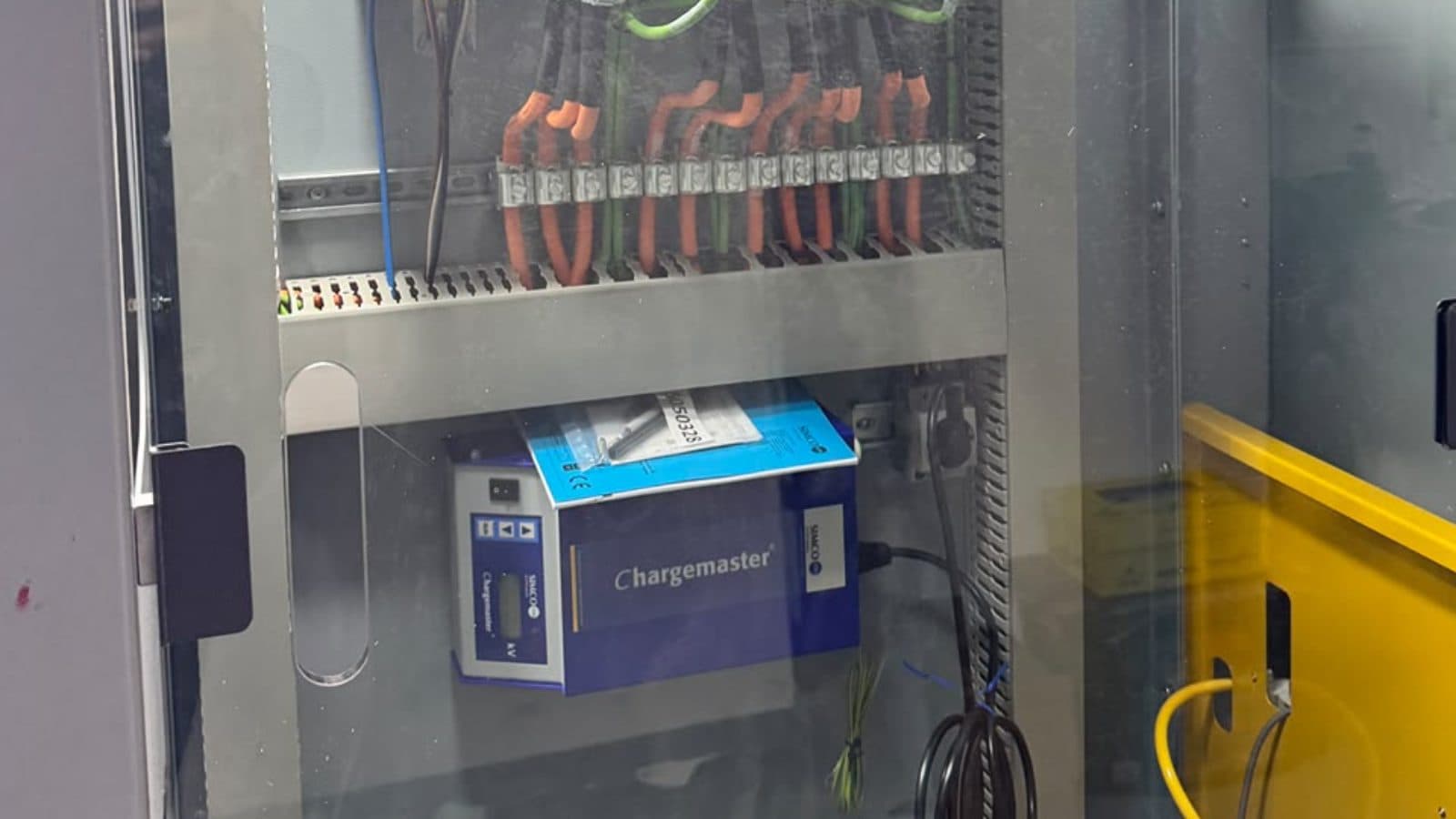
The Bor4 ES-Charge unit is built on a Simco-Ion Chargemaster generator; the charge can be set between 0 and 30 kV and up to 200 recipes can be stored.
Let us review your application. Send your container dimensions, cavity count and machine details through the quote form and we will prepare an application analysis and a preliminary quote. You can also reach us via our contact page.